What Is the First Task in Training a Large Group of Servers to Prevent Contamination of Food?
More and more people are eating abroad from home each year, some due to convenience or recreation and others due to necessity. Whether dining in a fast food eatery, a school foodservice, a hospital cafeteria, or a fine dining restaurant, people expect safe food and a clean environment.
Providing safe food requires careful attention by both management and employees. Since foodservice operations are characterized by high turnover rates, employee training often poses a challenge to managers.
The High Toll of Foodborne Disease
Foodborne illness costs lives and money. Millions of people go ill each twelvemonth and thousands die after eating contaminated or mishandled foods. Children, the elderly and people with weakened immune systems are particularly vulnerable to foodborne illness.
New estimates for the cost of foodborne illness were released in 2010 and 2012. Scharff (2010; 2012) estimated the cost of foodborne affliction in the U.S. to be $152 billion and $77.7 billion, respectively. Scharff included thirty identifiable pathogens plus foodborne illnesses for which no pathogen source tin can be identified in his gauge, while Hoffmann et al. (2012) estimated that illness from 14 major pathogens that business relationship for more than than 95 percent of the illnesses, hospitalizations and deaths in the U.Due south. cost $fourteen.1 billion.
Serving condom food has numerous benefits. By preventing foodborne illness outbreaks, establishments tin avoid legal fees, medical claims, wasted nutrient, bad publicity and possibly, closure of the institution.
An outbreak occurs when two or more cases of a like illness are caused past eating a common food. According to the Centers for Disease Control and Prevention (2011), these are the annual statistics related to foodborne affliction in the U.South.:
• 48 million gastrointestinal illnesses
• 128,000 hospitalizations
• iii,000 deaths
Some people are more at take chances of becoming ill from unsafe food. These populations include young children, elderly, people with compromised allowed systems and significant women.
What Makes Nutrient Unsafe?
Hazards can be introduced into foodservice operations in numerous ways: past employees, food, equipment, cleaning supplies and customers. The hazards may exist biological (including bacteria and other microorganisms), chemical (including cleaning agents) or concrete (including glass chips and metal shavings).
Microbiological hazards (leaner in particular) are considered the greatest hazard to the food manufacture. Bacteria ordinarily require Food, Acidity, Temperature, Time, Oxygen and Moisture in order to grow. Controlling any or all of these factors tin can help prevent bacterial growth. Call up "Fat-TOM" and how it relates to food rubber.
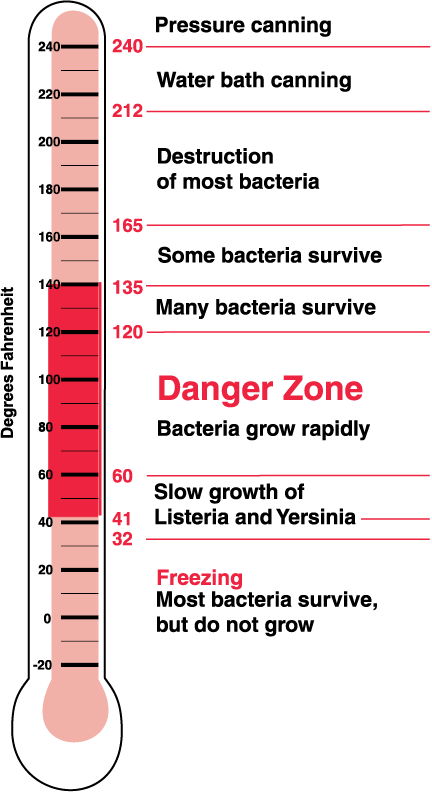
Temperature and time are the two nearly controllable factors for preventing foodborne illness. The temperature range betwixt 41 F and 135 F is considered the "danger zone" because these temperatures are very conducive to bacterial growth. Inside this range, bacteria abound most rapidly from 60 F to 120 F. When the conditions are right, bacteria double in number every ten to 30 minutes. For instance, in three hours 1 bacterium can abound into thousands of bacteria. Cooking food to safe temperature and cooling nutrient quickly, therefore, are disquisitional steps in the prevention of foodborne affliction.
Weighing the Risks
Certain foods and foodservice procedures are more than chancy than others. High protein foods such equally meats and milk-based products and foods that require a lot of handling during preparation require special attention by foodservice operations. Roast beefiness, turkey, ham and Chinese foods, for instance, accept been linked with more outbreaks of foodborne illnesses than pizza, barbecued meat or egg salad, still all of these foods are considered potentially hazardous. Other foods such as garlic in oil, rice, melon and sprouts likewise have been linked with outbreaks of foodborne disease.
Researchers have identified common threads between outbreaks of foodborne illnesses. Outbreaks normally involve ane or more of these factors.
1. Improper cooling of foods — the leading cause of foodborne illness outbreaks.
ii. Accelerate preparation of food (with a 12-hour or more lapse before service).
three. Infected employees who practice poor personal hygiene.
4. Failure to reheat cooked foods to temperatures that kill bacteria.
five. Improper hot holding temperatures.
vi. Adding raw, contaminated ingredients to food that receives no further cooking.
seven. Foods from unsafe sources.
viii. Cross contagion of cooked food by raw food, improperly cleaned and sanitized equipment, or employees who mishandle nutrient.
9. Improper use of leftovers.
10. Failure to oestrus or cook food thoroughly.
Source: CDC.
Nutrient Prophylactic Guidelines throughout a Foodservice Operation
Purchasing
Safe food begins with prophylactic raw materials. Food should exist obtained from canonical sources:
• Meats should exist inspected past the USDA or other bureau with animal health jurisdiction. The parts or packaging should bear a federal or land inspection stamp.
• Eggs should have a USDA grade; frozen and dried eggs should be pasteurized.
• Shellfish should be purchased from suppliers that appear on public health service Food and Drug Administration lists of Certified Shellfish Shippers or on lists of state-canonical sources. The control tags must be available if live shellfish are used.
Receiving
All foods should be in splendid condition when they arrive. The quality and temperature of foods should exist closely monitored at delivery. Delivery times should be planned for slow periods whenever possible to allow for inspection. Storage areas should be cleared prior to the receiving shipments, so food can exist immediately stored, and the storage areas should be clean and well-lit to discourage pests. Sanitary carts and dollies should be readily available to store foods immediately.
• Check frozen foods for signs of thawing and refreezing, such every bit blood on meat boxes, fluid leakage, frozen liquids at the lesser of the nutrient carton or large ice crystals in or on the production. Decline shipments that evidence signs of being thawed and refrozen.
• Pass up canned appurtenances that are dented, jutting or rusty. Never taste the food in a damaged can.
• Check packages to make sure they are dry and the seals are intact.
• Air-condition potentially hazardous foods immediately.
Storage
Foods should be protected from time and temperature abuse by purchasing according to the storage space bachelor. Proceed food in rooms designated for storage -- not in restrooms or hallways. Exercise not shop frozen, refrigerated or dry food directly on the floor or under overhead pipes. Place food on shelves or on mobile equipment at to the lowest degree six inches off the floor. Space foods so air tin freely flow around them.
Monitor expiration dates and rotate stock. Apply the "FIFO" principle – first in, first out.
Freezer Storage
• Maintain freezers at 0 F or lower. Monitor and record temperatures regularly.
• Defrost units regularly. During defrosting, store frozen foods in another freezer.
• Practise non refreeze thawed foods unless they accept been thoroughly cooked.
Fridge Storage
• Maintain refrigerators at 41 F or lower. Place thermometers in the warmest and coldest areas of refrigerators; mensurate and record air temperature regularly.
• Exercise not shop raw uncooked meats to a higher place prepared foods.
Dry Storage
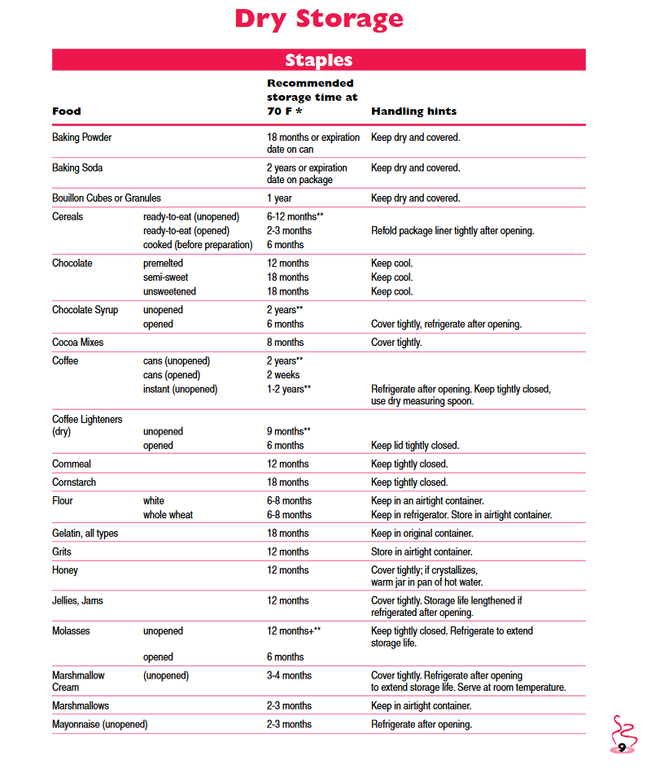
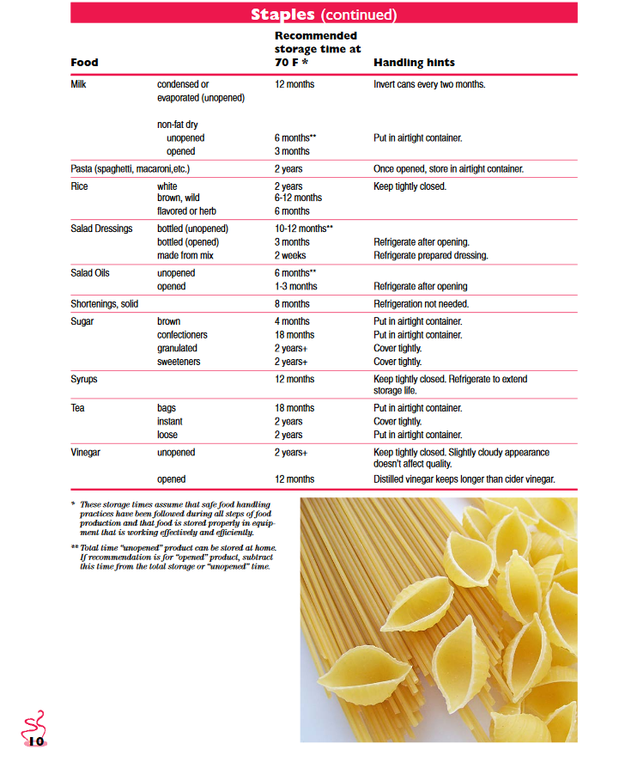
• Keep canned and dry goods dry.
• Label and date all dry goods.
• Measure and record temperature regularly.
• Proceed all goods in clean wrappers and containers. In most cases, wrap products in moisture proof and air-tight materials.
• Practice not store foods taken from their original containers in galvanized (zinc-coated) containers such every bit garbage cans. In add-on, food should not exist stored in enamelware, which may chip. Tomatoes, fruit punches or sauerkraut should not be stored in metal containers (unless made of stainless steel), due to potential leaching out of metals and other potential toxicants. Foods may be stored in food-grade plastic or glass containers.
Safe Food Production and Service
After monitoring receiving and storage for safety, it is essential to avert cross-contamination and temperature/time abuse during preparation, cooking, serving and cooling. Calibrated thermometers should be used to monitor temperatures. The following guidelines illustrate safe food handling at each stage.
Preparation
• Wash easily before beginning a chore and subsequently every pause that could contaminate hands. The handwashing sink -- not the prep sink -- should be used.
• Avoid cantankerous-contamination. Cross contamination occurs when harmful leaner are transferred from ane food to another by means of a nonfood surface, such as utensils, equipment or human hands. Cross contamination tin can also occur food to food, such as when thawing meat drips on ready-to-eat vegetables. Prevent cross contamination by observing these recommendations:
* Use proper handwashing procedures. If plastic gloves are worn, hands should be washed before putting them on. Plastic gloves should be changed whenever changing tasks that could cause contamination. Improperly-used plastic gloves can contaminate foods as easily as bare hands can.
* Use clean and sanitized utensils and cut boards when preparing nutrient. Clean cutting boards thoroughly with hot soapy water, followed past a hot water rinse and a final sanitizing pace (one tablespoon bleach per gallon of water) after using.
* Store cooked food and raw food separately.
• Wash all fresh fruits and vegetables with clear running water in a designated produce sink or in a ware-washing sink that has been properly cleaned and sanitized. Utilize a brush every bit necessary. Detergents are not suggested because they may leave residues.
• Disassemble, clean and sanitize meat slicers (and other equipment) on a timely footing.
• Launder, rinse and sanitize tin openers. Wash and rinse tops of cans before opening.
• Fix batches of nutrient no further in accelerate than necessary.
Thawing
• Thaw foods in fridge units, nether cool running water at a temperature of 70 F or lower, or in a microwave oven (depending on the corporeality of food). If thawing foods in running water, practise non allow thawed portions of raw animal foods to be to a higher place 41 F for more than four hours.
• Thaw set up-to-eat foods above raw food, so the thaw h2o does non contaminate the ready-to-eat food.
• Melt microwave-thawed foods immediately.
• Frozen food, such as vegetables and seafood, may be cooked directly to the recommended internal temperature. Allow boosted time for cooking. Large food items, such as whole turkeys, should not exist cooked from the frozen state.
Cooking
• Melt foods to safe time-temperature exposures. Apply a make clean sanitized thermometer to measure out the temperature by placing the thermometer in the thickest part of the nutrient. In sauces and stews, insert the thermometer at to the lowest degree 2 inches into the nutrient.
• Calibrate thermometers regularly past inserting into a mixture of water ice and h2o and adjusting the reading to 32 F/ 0 C. Thermometers that have been dropped or exposed to extremes in temperature should be calibrated.
Cook foods to the following minimum internal temperatures for safe:
Blimp meat and pasta, microwave-cooked foods*
165 F for xv seconds
*Microwave-cooked foods should be stirred and rotated during cooking. Afterwards cooking, the food should be allowed to correspond two minutes for even distribution of heat.
Poultry
165 F for xv seconds
Ground beef
155 F for 15 seconds
Pork, beef, lamb roasts and steaks
145 F** for fifteen seconds
**Allow three-infinitesimal stand fourth dimension.
Eggs
145 F for 15 seconds (immediate
service)
155 F for fifteen seconds (eggs that
will be held)
Cooked vegetables, commercially processed, gear up-to-swallow foods (cheese sticks, deep-fried vegetables, chicken wings)
135 F for 15 seconds
• Do not interrupt cooking times past partially cooking foods.
• Use tasting spoons – not the stirring spoon – to test foods. A clean tasting spoon should be used every fourth dimension the food is tested.
Property/Displaying Foods Betwixt Preparation and Serving
• Keep hot foods hot and common cold foods cold. Maintain hot foods at 135 F or higher and cold foods at 41 F or lower. Measure temperatures periodically near the top surface before stirring; stir with a clean, sanitized utensil, measure and tape temperature.
• Do not apply holding units, such as steam tables or chafing dishes, to cook or reheat foods.
• Hold cold foods in serving containers on ice; the food should non be in contact with the ice.
• Exercise not put previously held food on top of freshly prepared nutrient. Use upwards the previously held food beginning.
• Practise not handle ready-to-eat foods such every bit lettuce, ham and cheese with bare easily. Use spatulas, tongs, clean plastic gloves or deli tissue to handle nutrient.
• In self-service/buffet situations, provide spoons or tongs and so human easily do not impact food. Provide make clean plates for every trip through a buffet line.
• Linens and napkins used as liners that contact food must be replaced whenever the container is refilled.
• Handle plates by their edges, glasses by the bases and cups by their handles.
• Handle utensils by their handles.
• Use metal or plastic scoops – not glasses, bowls, cups or plates – to scoop ice.
• Discard potentially hazardous foods that have been removed from temperature command for more than 4 hours.
Safe Use of Disposables
Single-service items are used in many foodservice settings. They are manufactured to be safe and sanitary and should exist handled advisedly in foodservice establishments to maintain their cleanliness.
Disposables should be stored in their original storage containers at least 6 inches above the floor, away from pesticides, detergents and cleaning compounds. But the corporeality needed should exist removed from the container. To help go on disposables germ-free, follow these tips:
• Handle containers equally little as possible. In waited surface, servers should keep fingers away from any food-contact surfaces of cups, plates or other containers. In self-service situations, stack disposable plates, bowls and cups bottom side upwards, then customers do not touch the eating surface of another client's plate.
• Handle unwrapped forks, knives and spoons by the handles. Load utensil dispensers with the handles pointing out.
• Do not impact the drinking surface of cups when removing them from their plastic sleeves. Avoid overloading loving cup dispensers.
• Never re-use single-service articles even if they appear clean.
Cooling
• Label and date nutrient before common cold storage.
• Cool foods from 135 F to 70 F within two hours and from lxx F to 41 F inside 4 hours. Practise non cool food at room temperature before putting in the cooler.
• Exercise not mix fresh nutrient with leftover food.
• Divide food into smaller batches and put in shallow 4-inch deep metal pans. Liquid foods should be no more three inches deep, and thicker foods should exist no more than than ii inches deep. Prepare the open pans on the top shelf of the cooler and cover the nutrient after it has cooled.
• Use an ice bathroom to speed cooling. Identify container of food in a larger container filled with ice h2o to reduce cooling fourth dimension. Stir ofttimes during chilling to promote cooling and measure temperature periodically.
Reheating
• Reheat previously prepared foods to at least 165 F for xv seconds within two hours. Microwave-cooked foods should be rotated or stirred midway through the heating process and should be allowed to stand two minutes to allow for dispersal of oestrus.
• Do not reheat foods in hot belongings equipment such equally steam tables.
Personal Hygiene Guidelines for Employees
Foodservice workers must pay shut attention to personal hygiene. Policies on personal hygiene should be reviewed with employees and posted every bit reminders. For instance, workers who take a common cold, the influenza or another communicable illness, should inform their supervisor and not handle food. The following guidelines should be stressed to any worker dealing with nutrient:
• Go along clean by bathing daily, using deodorant, and washing hair regularly.
• Go along hair under control by wearing a pilus restraint.
• Article of clothing make clean clothing/uniform and/or apron.
• Avoid wearing jewelry, which can harbor bacteria and cause a concrete chance if parts fall into the food. Jewelry also can pose a personal safety take a chance if it gets caught in the equipment.
• Keep fingernails clean, unpolished and trimmed short.
• Clothing a bandage and plastic gloves if you take open cuts or sores. In some cases, employees should perform other not-food-related tasks until the wound heals.
• Do not chew gum while on duty.
• Do not smoke cigarettes while performing any aspect of food preparation.
• Avoid unguarded coughing or sneezing. Wash hands after coughing or sneezing.
Launder hands thoroughly
• before starting piece of work
• during food preparation as often as necessary to prevent cantankerous contamination when changing tasks and when changing from treatment raw foods to cooked foods.
• and after—
- coughing, sneezing, using a handkerchief or tissue.
- touching bare human torso parts.
- eating, drinking or smoking.
- handling raw meats, poultry and fish.
- treatment garbage, sweeping or picking upward items from the floor.
- using cleaners and other chemicals.
- using the toilet.
- handling soiled equipment and utensils.
- switching between raw foods and fix-to-eat foods.
Paw Washing Guidelines
1. Use water as hot as can be comfortably tolerated.
2. Moisten hands and add lather. Lather to the elbow if possible.
three. Scrub thoroughly.
4. Launder all surfaces, including backs of hands, wrists, between fingers and under fingernails.
5. Rub hands together for at least 20 seconds.
6. Rinse thoroughly nether running water.
seven. Dry hands thoroughly with a newspaper towel or hot air dryer.
8. Don't bear on anything that will recontaminate your hands. Employ a newspaper towel to plough off the h2o faucet and open the restroom door if necessary.
Wash, Rinse and Sanitize
Surfaces and equipment may look sparkling clean, notwithstanding bacteria may be present in big numbers. Cleaning is the physical removal of food and/or soil from surfaces. Clean does not necessarily mean sanitary. All food contact surfaces must exist sanitized.
Sanitizing takes cleaning a step farther by reducing the number of bacteria present. Sanitizing does not make a surface sterile or germ-free. Sterility would be impractical and too expensive for foodservice operations.
Sanitizing agents differ in the corporeality of contact fourth dimension required and their concentration and temperature requirements. When using combination products, such equally detergent-sanitizers, cleaning and sanitizing must done in ii separate steps. First utilise the detergent-sanitizer to clean, then ready another solution of the same agent to sanitize. Cleaning cloths tin can contaminate surfaces. They should be stored in sanitizing solution when not in employ.
Sanitizing may be accomplished manually or with equipment such equally dishmachines using heat (as steam or hot water) or chemicals. When heat sanitizing, using a higher temperature generally shortens the fourth dimension required to kill bacteria.
Since equipment varies, procedures should be written that specify cleaning and sanitizing chemicals and methods for all areas of foodservice. A schedule should exist in identify for cleaning, with records kept of when it was done.
The right order of steps involved in manual cleaning are:
1. Scrape or remove large particles of food.
2. Wash with an appropriate detergent/ water solution at 110 F.
three. Rinse in clean hot water.
4. Sanitize in hot water (171 F for at least 30 seconds) or use an appropriate chemical sanitizing solution such equally chlorine(25 ppm: 120 F; l ppm: 100 F; 100 ppm: 55 F); iodine (12.5 to 25 ppm at minimum temperature of 75 F ) or quaternary ammonium (100 to 200 ppm at a minimum temperature of 75 F) according to manufacturer's directions. Also refer to the requirements of your local regulatory bureau.
5. Air-dry.
References:
Centers for Illness Control and Prevention. (2015). Foodborne diseases active surveillance network (FoodNet).
Hoffmann, S., Batz, M. and Morris, J.G. Jr. (2012). Almanac cost of illness and quality adapted life yr losses in the Us due to xiv foodborne pathogens, Periodical of Food Protection, 75(7), 1291-1302.
National Restaurant Association. "n.d." Food prophylactic. Retrieved from www.restaurant.org/Manage-My-Restaurant/Nutrient-Nutrition/
Nutrient-Safe
Scharff, R. (2012). Economic brunt from health losses due to foodborne illness in the United states of america, Journal of Nutrient Protection, 75(1), 123-31.
Scharff, R. (2010). Health-related costs from foodborne illness in the Us. Produce Safety Project, Georgetown University.
U.S. Nutrient and Drug Administration. (2013). Nutrient Lawmaking 2013.
x Rules for Handling Food Safely
i. All employees must follow strict personal hygiene policies.
2. Potentially hazardous foods should exist identified on the menu, and safety handling procedures should exist established for each.
three. Food must be obtained from approved suppliers
4. Fourth dimension/temperature corruption must be avoided when handling prepared foods.
5. Potentially hazardous raw foods must be kept divide from set-to-eat foods.
6. Cross-contamination must be avoided: Establish handwashing guidelines. Wash, rinse and sanitize all food contact surfaces.
7. Foods must be cooked to recommended internal temperatures.
eight. Hot foods should be held hot (135 F or greater) and cold foods held cold (41 F or lower).
9. Foods must be cooled from 135 F to lxx F in two hours or less and from seventy F to 41 F in four hours or less.
ten. Leftovers must exist heated to 165 F for at least fifteen seconds within two hours. Leftovers merely should exist reheated once.
References: U.S. Nutrient and Drug Administration Food Code, 2013.
Source: https://www.ag.ndsu.edu/publications/food-nutrition/food-safety-basics-a-reference-guide-for-foodservice-operators
0 Response to "What Is the First Task in Training a Large Group of Servers to Prevent Contamination of Food?"
Post a Comment